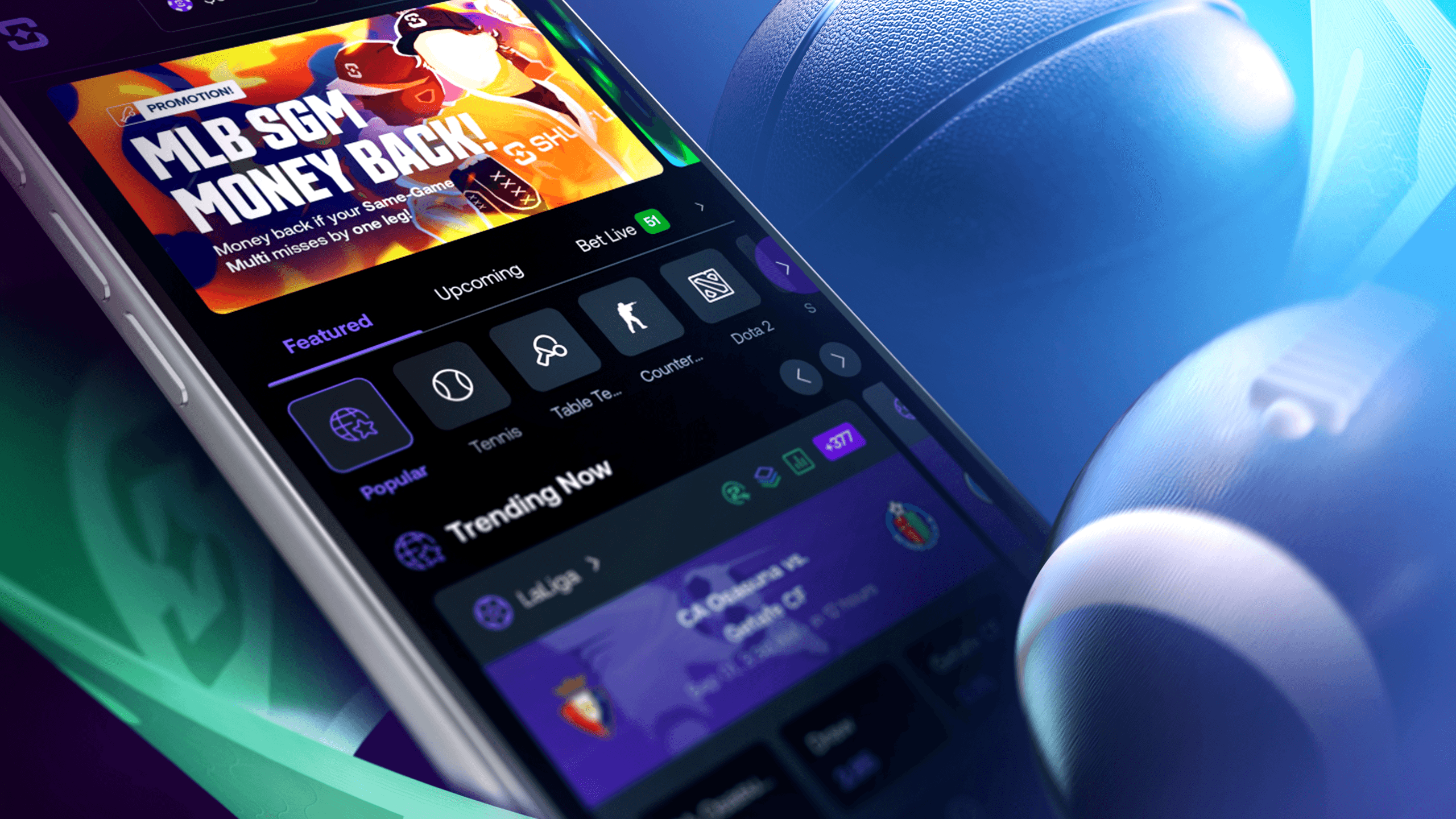
What Is a Parlay Bet? A Parlay Betting Guide for 2026
Key Takeaways
A parlay is one bet made of two or more selections ("legs"). Every leg has to win for the ticket to pay.
Payouts multiply: three -110 picks on one ticket pay about +596, versus -110 each on their own.
Parlays let you take on more risk for a bigger reward from a single stake, which is why they're one of the most popular ticket in sports betting.
Same-game parlays, multis, accumulators, and combo bets are all the same idea under different names.
What is a parlay in sports betting?
A parlay is a single wager that combines two or more bets into one ticket, where you only get paid if every selection wins. If one leg loses, the whole parlay loses, no matter how the others did.
Say you like the Chiefs on the moneyline, the Lakers to cover the spread, and a Yankees game to go over the total. Bet them separately and each stands on its own. Put all three on one ticket and you've built a three-leg parlay: a bigger payout in exchange for needing all three to land.
Parlays are one of the standard bet types covered in our sports betting guide, alongside moneylines, spreads, totals, and props. Almost anything you can bet as a single can become a leg.
Parlay, multiple bet, accumulator: are they the same thing?
Yes. "Parlay" is the American term. In the UK, India, and Australia, however, the same wager is usually called a "multiple bet" or simply a "multiple," and Australians also say "multi" or "multibet." Folks in the UK and Ireland sometimes refer to the betting market as an accumulator or "acca," which is a multiple bet made up of match-winner picks. Essentially the rules are identical: multiple legs, multiplied odds, all legs must win.
Term | Where it's Common | Meaning |
Parlay | United States, Canada | Two or more legs on one ticket |
Multiple bet / multiples | UK, India, Australia | Same. Bookmakers use it as the umbrella term for any bet with more than one selection |
Multi / multibet | Australia, New Zealand, and Shuffle's own bet slip | Same |
Accumulator / acca | UK, Ireland | A multiple bet, usually four or more legs |
Combo bet / combination bet | Europe, many online sportsbooks | Same |
One nuance: in UK bookmaker language, "multiples" also covers system bets such as Trixies and Yankees, where not every leg has to win. A parlay in the American sense is the strictest kind of multiple, where one losing leg sinks the ticket.
What is an accumulator bet?
An accumulator bet is a parlay by another name: a single stake on four or more selections, usually match results, where every pick must win. The term is standard in UK and Irish football betting, where a Saturday "acca" across the weekend's fixtures is the most common multiple placed. Three legs is often called a treble and two a double; "accumulator" tends to be reserved for four legs and up, though the math is the same at any length.
What is a combo bet?
A combo bet, or combination bet, is the term many European and international sportsbooks use for the same ticket. Two or more selections are combined, the odds multiply, and all legs must win. If a bet slip offers a "combo" option, it works exactly like a parlay or multi.
Sportsbooks label it differently in their bet slips, so if you don't see "parlay," look for "multi" or "combo." On Shuffle, the official terms are multiple bets and multi. That's the wording you'll see in the bet slip, the sports rules, and your bet history, so throughout this guide "parlay" and "multi" refer to the same ticket. The multi option appears automatically when you add a second selection to your slip.
How do parlay payouts work?
Parlay odds are calculated by multiplying the decimal odds of every leg together. The result is your total return per unit staked, including your stake.
Here's the process:
Convert each leg to decimal odds. A -110 line is 1.91. A +130 line is 2.30. A -150 line is 1.67.
Multiply them. 1.91 × 2.30 × 1.67 = 7.34.
Multiply by your stake. A 0.01 BTC stake returns 0.0734 BTC, for a profit of 0.0634 BTC.
Most sportsbooks show the combined odds on the slip before you confirm, so you rarely need to do this by hand. Still, knowing how the math works helps you spot when a ticket's price doesn't match its legs.
A common case is a parlay built entirely from standard -110 lines, the price you'll see on most point spreads and totals:
Legs (all -110) | Decimal Odds | American Odds | Profit on 100 Units |
2 | 3.64 | +264 | 264 |
3 | 6.96 | +596 | 596 |
4 | 13.28 | +1228 | 1,228 |
5 | 25.36 | +2436 | 2,436 |
6 | 48.41 | +4741 | 4,741 |
The moneyline is the most common parlay leg because it's the simplest: pick the winner. If you're new to that market, start with our guide to what a moneyline bet is before building tickets around it.
Is a parlay a good bet?
It depends on what you want from the bet. A parlay lets you take on more risk for a greater reward: every leg you add makes the ticket harder to land, but the payout climbs with it, and that trade is the whole appeal. A single at -110 roughly doubles your stake. A three-leg parlay of the same picks pays about seven times, and a five-leg ticket more than twenty-five times, all from one stake.
That's what makes parlays one of the most popular ticket types in sports betting. They turn a handful of opinions about a weekend into one bet with a payout worth talking about, and they do it without asking for a bigger outlay. If you have a real read on several games, a parlay is the bet built to reward being right about all of them at once. The flip side is simple: one wrong leg and the ticket loses, however the others went.
So if high risk / high reward doesn’t bother you then, yes, a parlay is a good bet.
For how stake sizing and bankroll rules fit together, read our sports betting strategy guide.
What is a lotto parlay?
A lotto parlay is a long-shot ticket built deliberately for its payout: a small stake, many legs, and a return that would matter if it landed. Think of a 0.0005 BTC stake on an eight-leg NFL Sunday multi, or a soccer acca across ten weekend fixtures at combined odds in the hundreds. The name says what it is. You're not expecting it to win; you're buying a cheap ticket to a big number.
Built that way, it's one of the more enjoyable bets in the sportsbook. A few things keep it in the "fun" column:
Keep the stake at lottery-ticket size. The whole point is that losing it changes nothing. If the stake would sting, it's not a lotto parlay anymore.
Mix in underdogs. Ten heavy favorites still only reach modest odds. A couple of plausible underdogs or unders get you to the payout you're after with fewer legs.
Use standard multis rather than same-game legs. Standard multis across different games stay eligible for Cash Out on many markets, so a ticket that's seven-for-seven with one leg left gives you a choice. Same-Game Multis don't.
Check the ceiling. Shuffle's maximum win limit is USD $500,000 per bet, including multis, so build the ticket toward a return that can actually be paid.
What can you put in a parlay?
Nearly any pre-match or live market can be a parlay leg: moneylines, point spreads, totals, player props, and futures, across one sport or several. The main restrictions are correlated outcomes and markets from the same event, which some books limit or price differently.
Common leg types:
Moneylines. Straight winner picks. Favorites at -300 add little to your payout; underdogs add a lot but lose more often.
Spreads and handicaps. Bets on the margin of victory. If you're unsure how a -6.5 line settles, our spread betting guide walks through it with examples.
Totals (over/under). Combined points, goals, or runs. Popular in parlays because they don't depend on who wins.
Player props. Yards, points, strikeouts. Often the building blocks of same-game parlays.
Cross-sport legs. An NFL spread, an NBA total, and a soccer moneyline can all sit on one ticket.
Choosing between a moneyline leg and a spread leg on the same game changes both your odds and your risk. The moneyline vs spread comparison explains when each makes sense.
What is a same-game parlay & how do you build a smart one?
A same-game parlay (SGP) combines multiple legs from a single event, such as a team to win, a player to score, and the game to go over the total. It's the bet for people who have a view on how a game will unfold, not just who wins: you can back the whole script on one ticket.
Because the legs come from the same game, they're connected. If the quarterback throws for 300 yards, his team winning and the game going over both become more likely, while a defensive grind makes those same legs less likely together.
Sportsbooks, like Shuffle, price the ticket as a package rather than by multiplying each leg on its own, so the combined odds can land above or below a straight multiplication depending on how the legs relate. The bet slip shows the final price before you confirm, so you always know exactly what the ticket pays.
At Shuffle, we refer to this bet type as a Same-Game Multi (SGM), which has three rules that differ from a standard multi:
Cash Out is not available on SGMs. Once placed, the ticket runs to settlement.
A void leg voids the whole SGM, not just that leg. A standard multi handles voids differently (see below).
The game must be played on its originally scheduled date. If it's postponed, canceled, or abandoned, the SGM is void.
A few principles for building a smarter one:
Build around one story. Pick a game script (a blowout, a shootout, a defensive grind) and choose legs that all fit it. Legs that pull against each other, like a team to win comfortably plus the opposing star to score 30, waste correlation.
Check which combinations are blocked. Books prevent legs that are nearly the same bet, such as a team moneyline plus that team's -0.5 spread. If a combination won't add to the slip, that's why.
Keep the story tight. Three legs that all describe the same game beat eight loosely related ones. Every extra leg is another way for the script to go off-track.
Read the price on the slip. The combined odds tell you how the sportsbook sees your story. If a ticket comes out shorter than you expected, the legs are pulling in the same direction; if it comes out longer, they're pulling against each other and you're being paid for the tension.
What happens if one leg of a parlay is void?
In a standard multi-game parlay, a void leg is removed and the ticket is settled on the remaining legs at their recalculated combined odds. The parlay does not lose. A three-leg parlay with one void becomes a two-leg parlay. In a Same-Game Multi, the rule is stricter: one void leg voids the whole bet and the stake is returned.
[Team: the SGM rule is stated in the sports rules. The standard-multi recalculation rule is industry convention and is not spelled out on the rules page; confirm with trading before publishing.]
Under Shuffle's sports rules, a leg is voided when:
A spread or total lands exactly on the line (a push).
A two-way market with no draw option ends in a draw.
A game isn't completed within its window: 48 hours for most sports, 24 hours for baseball, or the same Thursday-to-Wednesday week for the NFL. Markets already decided beyond doubt at the stoppage still settle.
A player in a prop leg doesn't take part. For soccer and baseball props, the player must start.
Shuffle also offers Cash Out on many standard multis, which lets you settle before the final leg finishes for a value based on the current odds. That's useful when four legs have won and the fifth is going badly. A few limits apply: Cash Out isn't available on SGMs, outright markets, or every market, a request can fail if odds move or the market suspends, and the value will always be below the full potential payout.
Parlays by sport: NFL, NBA, MLB, soccer, and esports
Each sport has its own rhythm, and that changes what a sensible parlay looks like.
NFL parlays
NFL parlays are the most popular ticket in American sports betting. A full Sunday slate makes multi-game slips easy to build, and the classic version is spreads and totals from the early games plus a same-game parlay on the primetime matchup.
The most common mistake is stacking heavy favorites: three -400 moneylines parlay to only about +95. A postponed game stays live on your ticket if it's played within the same Thursday-to-Wednesday NFL week.
For a useful guide to this year’s season, check out our NFL parlay betting guide 2026. Live lines are on the crypto NFL betting page.
NBA parlays
Basketball's high scoring makes totals and player props reliable parlay legs, and the nightly schedule means plenty of games to choose from. Watch for rest days and late scratches: an injury report an hour before tip-off can void or wreck a prop leg. Crypto basketball betting markets on Shuffle update through the day as lineups are confirmed.
MLB parlays
Baseball has the most variance of the major US sports, which cuts both ways for parlays. Favorites lose often, so moneyline parlays fail more than the odds suggest. Many experienced bettors prefer first-five-innings lines, which depend on the starting pitchers rather than the bullpen. Note that at Shuffle, bets stand even if a listed starting pitcher changes, so check the lineup before you lock the ticket. Odds for the season's games are on the baseball betting with Bitcoin page.
Soccer parlays
Soccer is where the accumulator was born, and match-result parlays across a weekend of fixtures remain the standard build. The draw is the parlay-killer: around a quarter of top-league matches end level, so a slip of four "home win" legs is far riskier than it looks. Double-chance markets reduce that risk at the cost of shorter odds. Browse bitcoin soccer betting markets across the major leagues.
Esports parlays
Esports matches are often best-of-three or best-of-five series, so map handicaps and total maps work well as legs alongside the series winner. Roster changes and patch updates move the odds quickly. One rule to know: Shuffle doesn't allow a parlay to include more than one match involving the same team, so you can't stack a team's group-stage games onto one ticket. If you're new to these markets, the esports betting guide covers how series and map betting work before you combine them.
What is the best sport for crypto parlays, accumulators, and multis?
There's no single right answer, and paying in crypto doesn't change the odds. The "best" sport is the one whose market structure fits how you like to build a ticket. Soccer and the NFL are the two most natural fits, for different reasons.
Sport | Why it suits multis | The catch |
Soccer | Dozens of fixtures every weekend, the accumulator tradition, and low-scoring games that keep totals and double-chance lines close to even money | The draw kills more accas than any upset does |
NFL | One weekly slate, nearly every spread and total priced at -110, and a deep same-game menu | One postponement can hold a ticket open until midweek |
NBA | Games every night, high scoring, and a large prop market for correlated same-game legs | Late scratches void prop legs at short notice |
Esports | Series formats create map handicaps and totals that pair naturally with the series winner | You can't include two matches from the same team on one ticket |
Tennis, MMA | Two-way markets with no draw, so fewer ways for a leg to fail on a technicality | Retirements and no-contests void the leg |
If you want a rule of thumb: soccer for weekend accumulators built from match results, and the NFL for spread-and-total parlays where every leg sits at a symmetrical price. Baseball is the weakest fit for moneyline multis because of how often favorites lose, and combining several two-way markets in tennis or MMA carries the highest void risk.
Where crypto does make a difference is the wallet, not the sport. Betting in a stablecoin keeps your stake's value steady across a Saturday of fixtures or a Sunday slate, and settlement into your balance is immediate once the last leg is graded.
Parlays vs round robins and system bets
A parlay needs every leg to win. A system bet (also called a round robin) breaks the same selections into several smaller parlays, so you can still get a return if one or two legs lose. The trade-off is a bigger total stake and a lower payout when everything hits.
For example, a "2/3" system on three selections creates three separate two-leg parlays. If two of your three picks win, one of those parlays pays. A straight three-leg parlay on the same picks would have lost. Our explainer on system bets covers the common formats and when they beat a straight parlay.
How to bet multiples on Shuffle with crypto
Placing a parlay, or multi, on Shuffle works the same as a single bet, with one extra step: adding more than one selection before you confirm.
Open the crypto sports betting lobby and pick your first selection. It appears in your bet slip.
Add a second selection from any event. The slip switches to a multi and shows the combined odds.
Keep adding legs, or remove any you change your mind on. The combined odds update each time. Boosted Odds selections can't be added to a multi.
Enter your stake. You can bet in Bitcoin, Ethereum, or a stablecoin like USDT or USDC if you'd rather not have the value of your stake move with the crypto market while the games play out.
Review the total odds and potential return, then confirm.
You can track the ticket in your open bets and, where available, cash out before the last leg settles. A maximum win limit of USD $500,000 (or equivalent) applies to all sports bets, including multis, so a very long-shot ticket is capped there.
FAQ
What does parlay mean in betting?
A parlay is a single bet combining two or more selections. All of them must win for the parlay to pay, and the odds of each leg are multiplied together.
How many legs can a parlay have?
Most sportsbooks allow somewhere between 10 and 20 legs on one ticket. Long tickets are the lotto-parlay style: small stakes, big potential returns, and a low chance of landing. Shorter tickets of two to four legs win far more often.
Do parlays pay more than straight bets?
Yes. The payout multiplies with each leg, so a parlay returns far more than the same stake on a single bet. The trade-off is that every leg has to win, so parlays win less often than singles do.
Is a 2-leg parlay worth it?
A two-leg parlay is a good way to link two picks you're confident in. Two -110 legs pay about +264 from a single stake, versus roughly even money on each bet placed separately, and you only need two results to go your way.
Can you cash out a parlay early?
On many sportsbooks, including Shuffle, yes for standard multis where the feature is offered. Cash Out gives a settlement value based on current odds while legs are still open, and it's always less than the full potential payout. Same-Game Multis and outright markets aren't eligible.
What is a multi bet?
A multi bet is the Australian and New Zealand term for a parlay. It works the same way: several selections on one ticket, all of which must win.
What is a multiple bet?
A multiple bet is the UK, Indian, and Australian term for any wager with more than one selection. A parlay is the most common type, where every leg must win. System bets are also multiples, but they pay out if only some legs win.
Is an accumulator the same as a parlay?
Yes. An accumulator, or acca, is the UK and Irish name for a parlay, usually made up of four or more match-result picks. Every leg must win, and the odds of each leg are multiplied together.
Parlays are fun because they turn a few strong opinions into a shot at a big return. Keep stakes small and treat a winning ticket as a bonus, not a plan. Shuffle lets you set loss and wager limits from your account, and if betting ever stops being enjoyable, support is available through your account settings. Shuffle is licensed and regulated in Curaçao, and you must be 18 or older to bet on the online crypto casino and sportsbook.